
 Print
Print
Technology Empowers Booming Production and Sales: Miyi Tomatoes Fuel a Major Income-Increasing Industry
2025/10/23 16:42
Origin:cced.cn


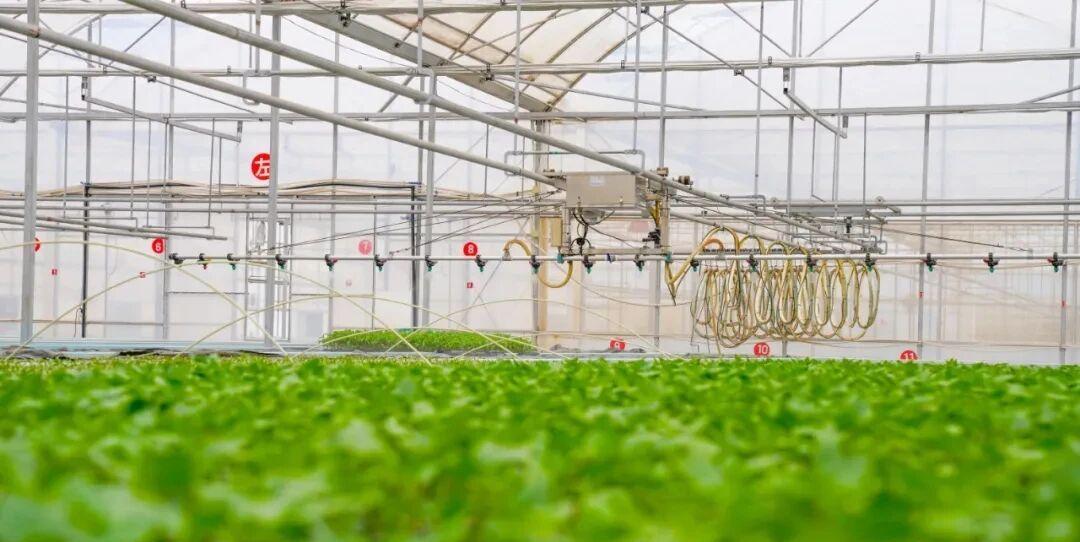
The warm autumn sun gently shines on the banks of the Anning River. Inside the vegetable greenhouses in Miyi County, vitality abounds—ridges of lush early-spring tomato seedlings spread like a thick green blanket over the land.
Natural Advantages: A Distinctive Industry
Located in the southwest corner of Sichuan Province, Miyi County features a subtropical dry-hot valley climate with vertical variations. It has an average annual temperature of 20.5℃ and annual sunshine duration of 2,700 hours, making it a "natural greenhouse" and one of the few tropical crop-growing areas in China. Its abundant light and heat resources, combined with suitable temperature differences, create an ideal environment for tomato cultivation. By 2025, the county’s total tomato planting area will reach over 60,000 mu (1 mu ≈ 0.0667 hectares), with an output value of 1.95 billion yuan.
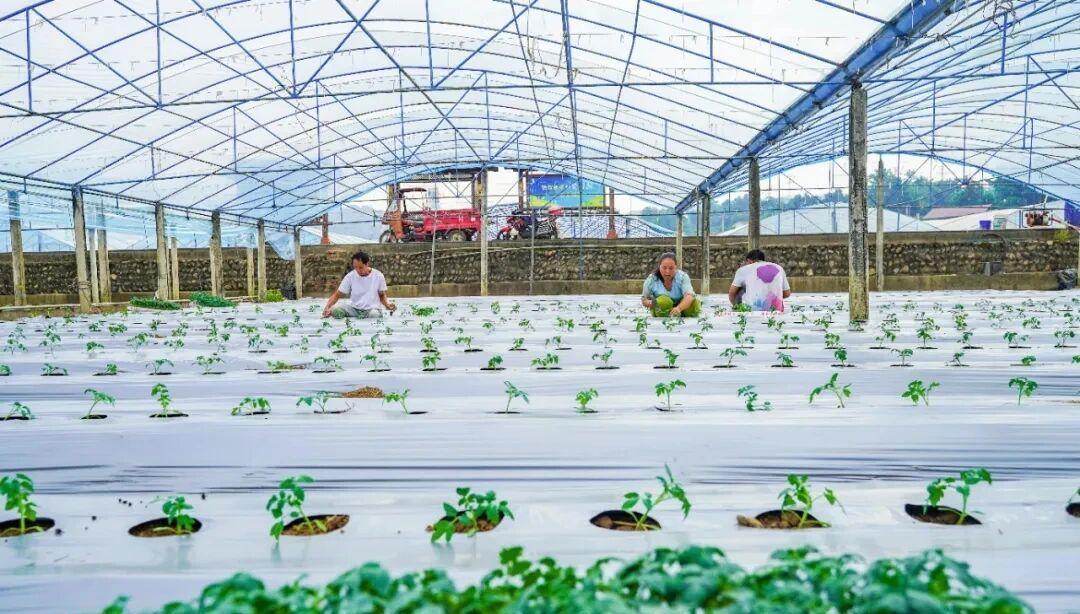
In Golden October, at Anquan Village in Salian Town, Miyi County, the fields—fresh from rice harvest—have turned from golden yellow to vibrant green. Villagers are seizing the farming season to transplant tomato seedlings; the tender green shoots line the ridges neatly, nurturing the hope of a bountiful early-spring harvest next year.
"We stored the rice last month, then immediately started weeding and plowing the land, and now we’re transplanting the tomato seedlings!" Ms. Zhou, a villager from Anquan Village, skillfully finishes planting a seedling. Behind her, the fully transplanted fields brim with vitality under the autumn sun.
"Rice-vegetable rotation" is Miyi County’s distinctive agricultural production model: rice is grown from May to September, and vegetables from October to April the following year. This model aligns the growing periods of rice and vegetables, ensuring food security (securing the "grain bag"), enriching the vegetable supply (filling the "vegetable basket"), and boosting farmers’ incomes (bulging the "money bag").
"The tomatoes we plant in October this year will hit the market around March next year—just in time for the gap in early-spring vegetable supply. We have no worries about price or sales," Ms. Zhou says, gazing at the newly planted seedlings with anticipation. "Growing one season of rice ensures our staple food, and growing one season of vegetables adds extra income. One plot of land earns us double the money—isn’t that great?"
Technology Empowerment: Upgrading Cultivation
"Air temperature: 17.3℃, air humidity: 45.2%, soil temperature: 13.5℃, soil humidity: 13.5%..." At Leiwo Village in Binggu Town, Leng Xingyao, head of the Lvyi Fruit and Vegetable Planting Professional Cooperative, opens his mobile phone and checks the growth environment of tomato seedlings in the greenhouses via an Internet of Things (IoT) cloud platform.
Reportedly, the cooperative has a 10,000-square-meter industrialized seedling nursery area, a 5,000-square-meter sightseeing and picking experience area, a 50,000-square-meter new variety demonstration area, and a 2,500-square-meter soilless cultivation demonstration greenhouse—all equipped with modern agricultural technologies such as integrated water and fertilizer systems and IoT control.
Data including soil humidity and temperature, air humidity and temperature, light intensity, and carbon dioxide concentration—all displayed on Leng Xingyao’s phone—is transmitted in real time to the Miyi Modern Agricultural Big Data Technology Innovation Service Center, located several kilometers away.
"Through big data analysis, we can automatically monitor factors like light and temperature, and control irrigation, fertilization, pesticide spraying, cooling, and light supplementation based on real-time data," a relevant person in charge of the center explains. Data-driven operations greatly improve precision, enhancing the quality of agricultural products while reducing labor costs.
Since its operation, the center has helped the park achieve over 98% coverage of efficient water-saving irrigation and green pest control. It cuts labor costs by 1/3, water consumption by 30%, and fertilizer use by 20% annually.
In recent years, Miyi County has actively promoted the "Internet + Agriculture" model, further optimizing data integration and developing the Miyi Agricultural Big Data Information System. In addition to querying market price trends, the system offers services such as agricultural situation releases, an agricultural technology knowledge base, socialized services, and data direct reporting—transforming farmers’ tomato cultivation from "relying on experience" to "relying on big data."

Booming Production and Sales: Thriving Business
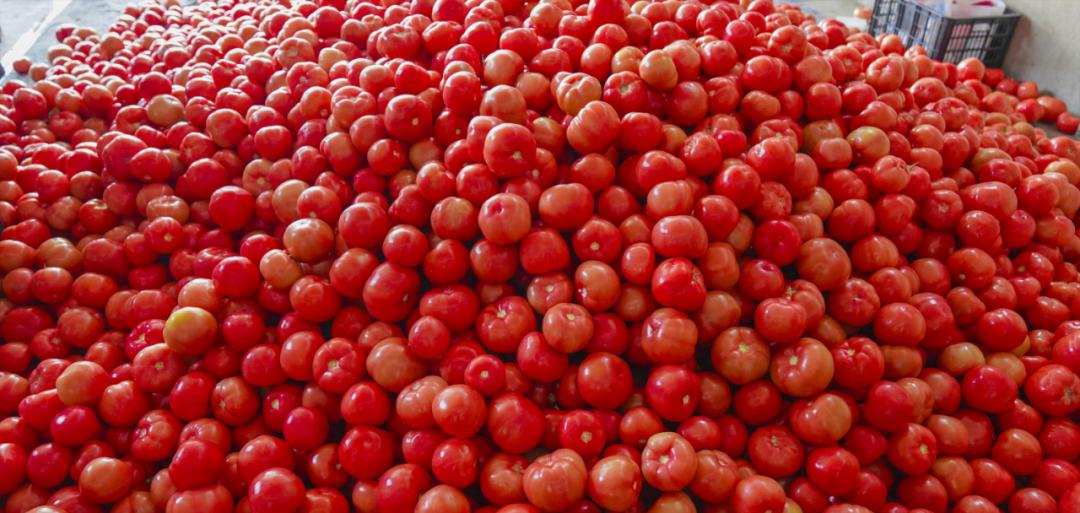
"We received online orders yesterday, and buyers will come to purchase today, so we got up early to pick the tomatoes," says Ms. Wang, a villager in Haita Village, Salian Town, beaming with joy as she looks at the freshly picked, bright red autumn tomatoes. No sooner had she finished speaking than another order call came in, keeping her busy.
Miyi’s tomato varieties are rich and diverse, including traditional large pink-fleshed tomatoes and large red tomatoes, as well as emerging varieties like cherry tomatoes. Rich in natural vitamin C, lycopene, and trace elements, they are deeply loved by consumers.
Many villagers like Ms. Wang have expanded their sales channels through e-commerce platforms. Meanwhile, Miyi County has actively built platforms to help its distinctive agricultural products reach the market efficiently. In September this year, it facilitated a cooperation agreement between Chengdu Qiandama Fresh Supermarket Co., Ltd. and Chengdu Tianque Youxian Agricultural Technology Co., Ltd. in Miyi County.
Under the agreement, the two parties will jointly build a standardized planting base in Miyi County, develop exclusive "Qiandama" product lines, and open an efficient "field-to-table" production-sales connection channel—helping Miyi tomatoes go beyond Sichuan and sell well across the country.
For rural revitalization, industry comes first. Miyi County has leveraged its natural advantages to develop cultivation, relied on technology to improve product quality, and used government support to promote production-sales collaboration—driving the tomato industry from "growing well" to "selling well," and truly ensuring that high-quality produce fetches good prices.
Going forward, Miyi County will continue to deepen the development of its tomato industry, explore innovations, and let these "small tomatoes" continue to unleash "great potential," injecting sustained momentum into increasing farmers’ incomes. (Text/Photos by Baqie Muga)
Copyright © CCEDN.COM.CN. All Rights [京ICP备2024049485号-1] Tel: 0086-10-88820521